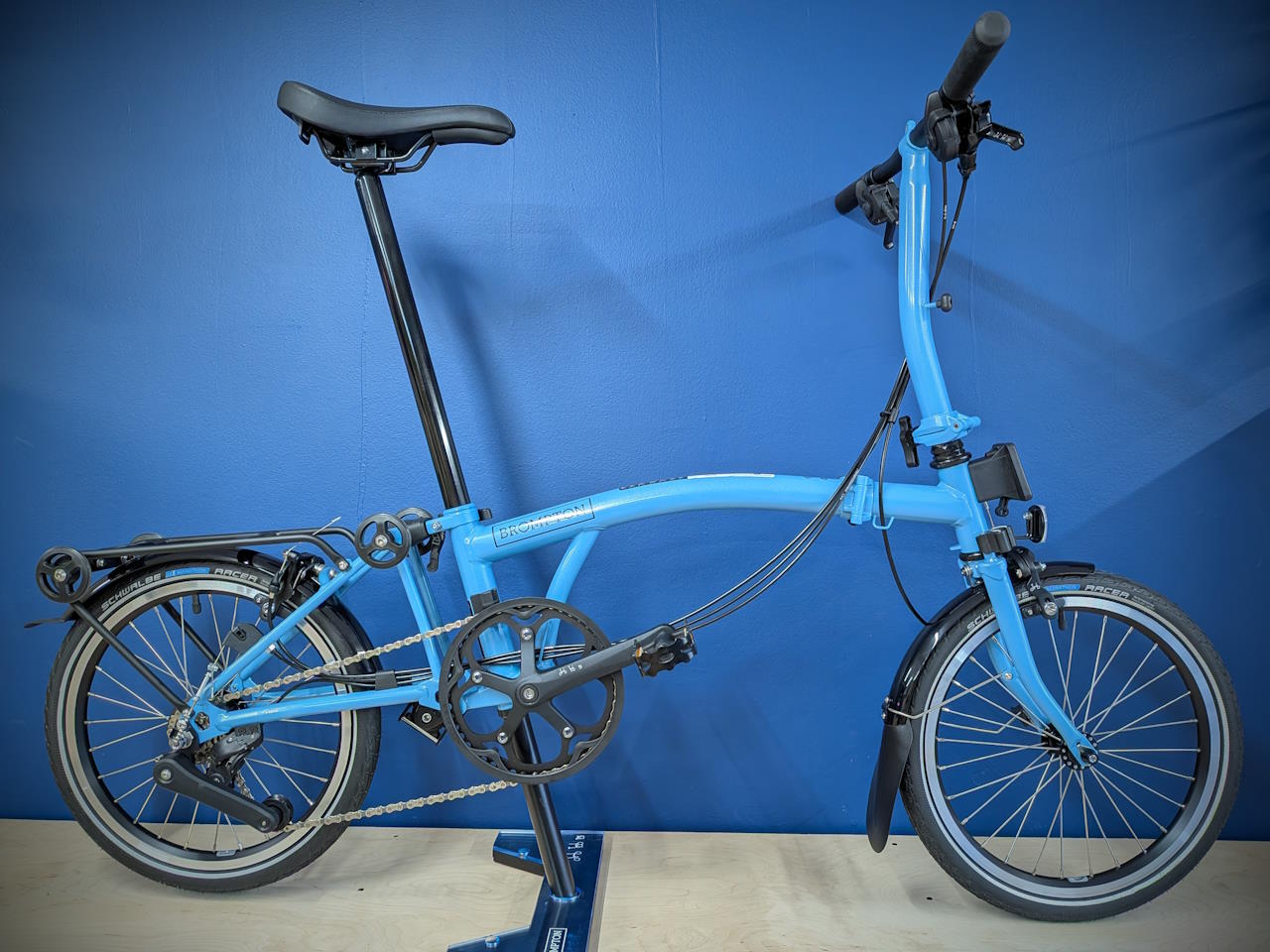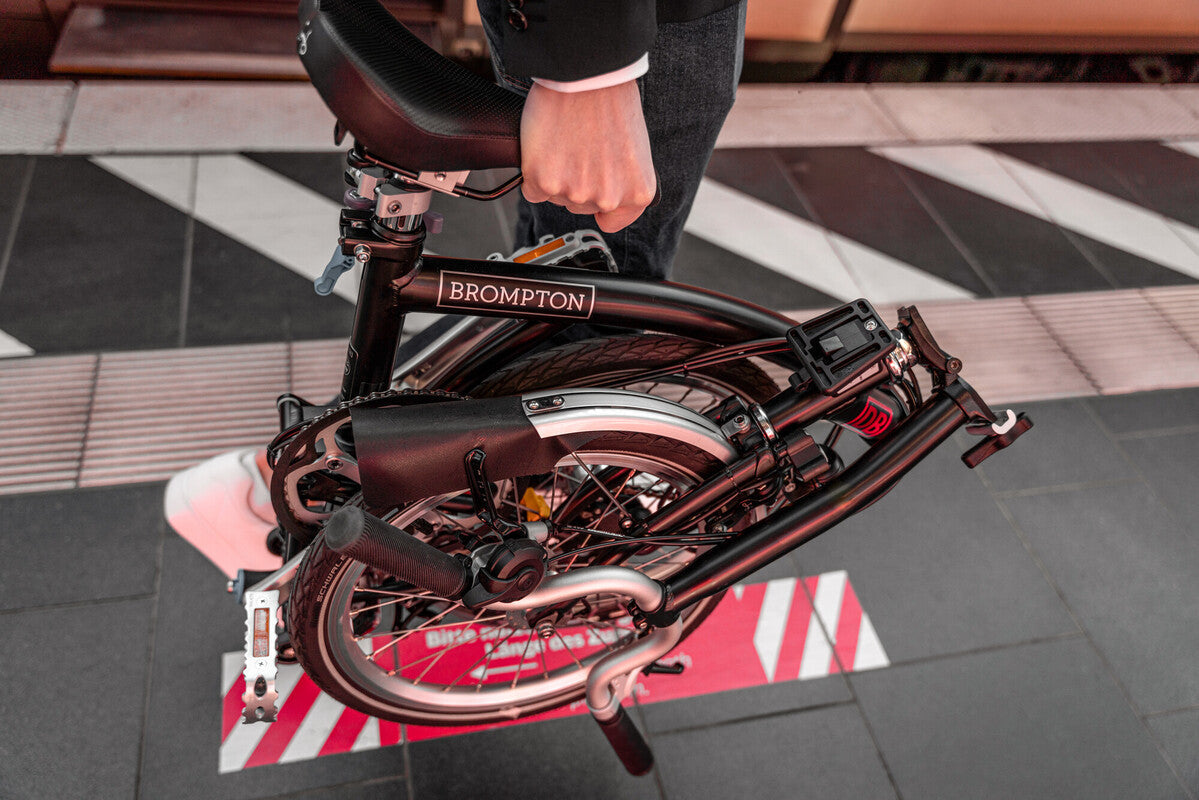

Brompton C vs P vs T vs G Line: Complete Buyer’s Guide
If you’re trying to choose the right Brompton, you’re not alone. With four distinct Lines now available, the decision isn’t about “which bike is best”—it’s about which Brompton fits your life best.
In this guide, we’ll break down the differences between:
So you can confidently choose the right model for commuting, travel, comfort, or performance.
Quick Answer: Which Brompton Should You Choose?
- Best all-around bike: C Line
- Best lightweight commuter: P Line
- Lightest, most premium option: T Line
- Best for comfort & rough roads: G Line
If you want the deeper breakdown, keep reading.
What Makes Each Brompton Line Different?
All Brompton bikes share the same core DNA:
- Compact fold
- Easy storage
- Urban practicality
Where they differ is in weight, ride feel, and intended use.
Side-by-Side Comparison
| Line | Weight | Best For | Ride Feel | Key Advantage |
|---|---|---|---|---|
| C Line | Mid | Everyday use | Stable, familiar | Best balance of everything |
| P Line | Lighter | Fast commuting | Responsive, efficient | Noticeably lighter than C |
| T Line | Lightest | Travel, premium riders | Ultra-responsive | Lightest Brompton ever |
| G Line | Heaviest | Comfort, mixed terrain | Smooth, planted | Handles rough surfaces |
C Line
Weight: Mid (27lbs for 12-speed)
Best for: Everyday use
Ride feel: Stable, familiar
Advantage: Best balance of everything
P Line
Weight: Lighter (23.75lbs for 12-speed)
Best for: Fast commuting
Ride feel: Responsive, efficient
Advantage: Noticeably lighter than C
T Line
Weight: Lightest (19.75lbs for 12-speed)
Best for: Travel, premium riders
Ride feel: Ultra-responsive
Advantage: Lightest Brompton ever
G Line
Weight: Heaviest (32-34lbs depending on size)
Best for: Comfort, mixed terrain
Ride feel: Smooth, planted
Advantage: Handles rough surfaces
Brompton C Line — The Everyday Standard
If you’re unsure where to start, this is it.
The C Line is the foundation of the Brompton range—reliable, versatile, and built to handle daily life in the city.
Best for:
- Commuting
- Errands and everyday riding
- Riders who want proven durability
Why choose it:
- The most balanced option
- Excellent value
- Familiar, stable ride feel
When to upgrade:
If you start caring about weight (especially carrying the bike), that’s where the P or T Line comes in.
Brompton P Line — The Lightweight Upgrade
The P Line takes everything people love about the C Line and makes it lighter, faster, and more refined.
Best for:
- Daily commuters
- Riders carrying their bike up stairs or onto transit
- Anyone who wants a more responsive ride
Why choose it:
- Noticeably lighter than the C Line
- More efficient acceleration
- Feels quicker and more modern
C Line vs P Line (quick take):
- Same use case
- P Line = better performance + less weight
If you like the idea of the C Line but want something sharper, this is your move.
Brompton T Line — The Ultra-Light Flagship
The T Line is Brompton at its most advanced.
It delivers the same folding functionality—but at a dramatically reduced weight using high-end materials.
Best for:
- Frequent travellers
- Riders prioritizing weight above all else
- Premium buyers who want the best Brompton available
Why choose it:
- The lightest Brompton ever made
- Easiest to carry and store
- High-performance ride feel
T Line vs P Line:
- Both are lightweight
- T Line is lighter and more premium
- P Line is more accessible and practical for most riders
If weight is your top priority, nothing else comes close.
Brompton G Line — Comfort & Capability Anywhere
The G Line is the outlier—in a good way.
It’s designed for real-world riding conditions, not just smooth pavement.
Best for:
- Rough roads
- Longer rides
- Riders who value comfort and stability
- Light trails and mixed terrain
Why choose it:
- More stable, planted ride
- Handles uneven surfaces with ease
- Feels closer to a full-size bike
G Line vs C Line:
- C Line = compact urban focus
- G Line = comfort and capability
If your rides aren’t always smooth, the G Line is worth serious consideration.
How to Choose the Right Brompton (Based on Your Life)
If you commute daily
→ Start with C Line
→ Upgrade to P Line if weight matters
If you carry your bike often
If you travel frequently
→ T Line (lightest and easiest to handle)
If your roads are rough or unpredictable
→ G Line
If you want one bike to do everything
→ C Line (safest, most versatile choice)
The Real Difference: It’s Not Just Specs
What most comparisons miss is this:
Each Brompton Line isn’t just a spec upgrade—it’s a different riding experience.
- C Line = dependable and familiar
- P Line = lighter and more responsive
- T Line = minimal and performance-focused
- G Line = stable and confidence-inspiring
That’s what you should base your decision on.
Frequently Asked Questions
Is the P Line worth it over the C Line?
If you value lighter weight and a more responsive ride—yes. Otherwise, the C Line is still excellent.
Is the T Line only for enthusiasts?
Mostly. It’s best for riders who prioritize weight and premium performance.
Can the G Line replace a full-size bike?
For many riders, yes—especially for comfort and mixed terrain.
Which Brompton is best for beginners?
The C Line. It’s the easiest entry point and does everything well.
Final Thoughts: Which Brompton Is Right for You?
There’s no single “best” Brompton—only the one that fits your riding style.
- Choose C Line for balance
- Choose P Line for lighter performance
- Choose T Line for ultimate portability
- Choose G Line for comfort and capability
If you’re still unsure, the best next step is to compare them side-by-side or test ride them—the differences become clear immediately.